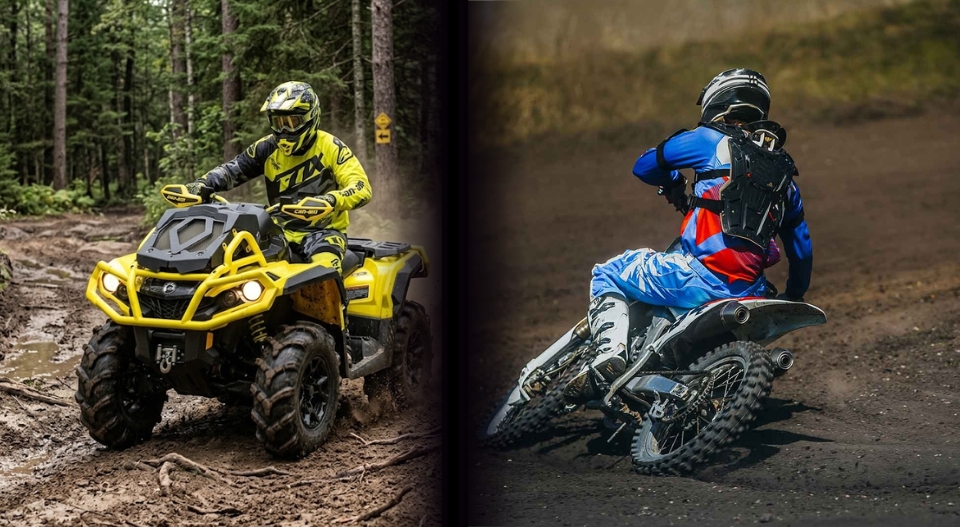
A large number of buyers begin comparing machines before fully understanding how different each category actually is. ATV, UTV, quad, and side-by-side are often grouped together in the same conversation, even though they are designed for very different types of riding and work.
The difference becomes obvious once the machine is used in real conditions. A rider focused on narrow Alberta trails may value maneuverability and compact size. An acreage owner may care more about towing, cargo space, and passenger seating. A family planning weekend rides usually prioritizes comfort and stability differently than someone riding solo for hunting access or backcountry travel.
That is why the ATV vs UTV decision is rarely about which machine is “better.” The better option depends on terrain, storage needs, passenger count, hauling requirements, and how the machine will actually be used throughout the year.
What Is an ATV?
An ATV is typically designed for a single rider, with handlebar steering and a more compact frame. Compared to larger utility vehicles, ATVs are built to move through tighter spaces and react more quickly to changing terrain.
Their smaller footprint makes them popular for trail systems where maneuverability matters more than passenger capacity. Riders navigating narrow wooded paths, uneven terrain, or tighter access routes often prefer the control and responsiveness that an ATV provides.
In Alberta, ATVs are commonly used for trail riding, hunting access, acreage tasks, and general utility work. They are frequently chosen by riders who need flexibility across both recreation and practical day-to-day use.
Weight is another advantage. ATVs are generally easier to load onto trailers, transport between locations, and store when not in use. For buyers with limited garage space or smaller towing setups, that difference can become important quickly.
The tradeoff is capacity and protection. ATVs typically offer less cargo space, limited passenger seating, and less shielding from mud, wind, rain, or cold-weather riding conditions. Riders spending long hours outdoors or carrying multiple passengers may eventually find those limitations more noticeable than the agility advantages.
What Is a UTV or Side-by-Side?
The terms “UTV” and “side-by-side” are commonly used to describe the same category of machine. Unlike ATVs, these vehicles use a steering wheel, pedal controls, and side-by-side seating similar to a small off-road vehicle or compact utility platform.
UTVs are built around capacity and versatility. Most models are designed to carry multiple passengers while also providing space for tools, cargo, equipment, or supplies. That combination makes them popular across both recreational and work-focused environments.
In Alberta, side-by-sides are often used for acreage maintenance, hauling materials, towing small trailers, group trail riding, and longer recreational trips where comfort becomes more important over time. Families and property owners frequently choose this category because it handles a wider mix of tasks without requiring multiple machines.
Ride experience is one of the biggest differences compared to an ATV. Enclosed seating position, improved suspension setups, storage compartments, and greater vehicle stability can make longer rides less physically demanding. Towing capability is also stronger on many UTV models, especially when carrying equipment or heavier loads.
The tradeoff is size. Side-by-sides require more storage space, larger trailers, and wider trail access. Some riding areas restrict larger vehicles based on trail width or terrain limitations. Purchase price and accessory costs also tend to be higher compared to many ATV setups.
ATV vs UTV: The Biggest Real-World Differences
The gap between ATVs and UTVs has become much larger over the past decade. Buyers are no longer comparing two similar machines with slightly different seating layouts. In practice, they now serve very different ownership styles.
Market demand reflects that shift. UTVs currently dominate the North American off-road market, representing roughly two-thirds of all ATV and UTV sales combined. Industry reports from 2024–2025 show UTV sales more than doubling ATV sales volume, driven by growth in both recreational and utility use.
The reason is simple: modern buyers often want one machine that can handle passengers, hauling, recreation, and property work at the same time. ATVs still hold a strong position, but the decision between ATV vs UTV now depends much more heavily on usage pattern than price alone.
Passenger Capacity
Passenger layout is usually the first major dividing line.
ATVs are primarily designed around a single rider. Some models allow an additional passenger, but the overall experience still centers around compact solo operation and rider mobility.
UTVs and side-by-sides are built for shared use. Two-seat and four-seat configurations are common, making them far more practical for families, work crews, hunting groups, or recreational trail riding with multiple passengers.
This difference is one reason many buyers comparing a quad vs side by side eventually move toward UTV platforms as riding habits evolve from solo recreation into group or family use.
Trail Access and Maneuverability
ATVs remain stronger in tighter terrain. Narrow trail systems, wooded access routes, and technical paths often favour the smaller footprint and quicker steering response of an ATV.
Lighter weight also helps in softer terrain and tighter maneuvering situations. Riders navigating hunting access trails or more technical backcountry terrain often prefer the agility advantages that ATVs provide.
UTVs trade maneuverability for stability and capacity. Wider wheelbases improve confidence on uneven terrain but can create limitations on narrower trail systems where width restrictions apply.
Cargo and Towing
Cargo capacity is one of the biggest practical advantages for UTVs. Many models are designed with dedicated cargo beds, stronger towing capability, and more storage integration directly from the factory.
That versatility has pushed UTV adoption heavily into agricultural and acreage use. Industry surveys show that farming, ranching, and utility-focused ownership make up a major share of the North American UTV market.
ATVs can still tow and carry equipment effectively, particularly for lighter utility work. Their advantage is mobility rather than maximum carrying capacity.
Comfort and Ride Experience
Longer rides tend to expose the biggest comfort differences between the two categories.
ATVs require more active rider movement and physical positioning during operation. Riders shift body weight constantly during turns, uneven terrain, climbs, and technical trail sections. Many owners enjoy that direct riding feel because it creates a more responsive and physically engaged experience on tighter trails.
UTVs place more emphasis on seated comfort, suspension travel, weather protection, and overall ride stability. Steering wheel controls, bucket seating, roofs, windshields, and enclosed cab options create a riding experience that feels significantly closer to a compact off-road vehicle. That difference becomes especially noticeable during longer recreational trips, colder weather, or multi-passenger riding.
Safety perception also plays a major role in the ATV vs UTV decision. According to North American OHV injury data, ATVs account for roughly 85–92% of reported off-highway vehicle injuries, making them statistically associated with a much higher share of accident-related trauma compared to UTVs. Side-by-sides commonly include seat belts and rollover protection structures (ROPS), which is one reason many families and acreage owners view them as a more stable platform for group riding.
Transport and Storage
ATVs are easier to transport for many owners. Their smaller size allows simpler trailer setups, less storage space, and easier loading for single riders.
UTVs demand more planning. Larger trailers, wider storage access, and increased towing requirements become part of ownership almost immediately. Buyers with limited garage space or smaller tow vehicles often notice this difference before the first ride even happens.
Which One Fits Your Riding Style?
The better machine usually becomes obvious once the riding environment and day-to-day use are clear. Buyers who focus only on engine size or appearance often end up with equipment that does not match how they actually ride.
Best for Solo Trail Riders
ATVs are usually the stronger fit for riders who spend most of their time alone on trails. Their lighter weight, quicker steering response, and narrower width make them easier to maneuver through wooded paths, tighter trail systems, and uneven terrain.
Riders who enjoy a more active riding style often prefer the direct handling feel that ATVs provide. Transport is also simpler for solo owners using smaller trailers or limited storage space.
Best for Families and Group Riding
UTVs and side-by-sides are generally the better choice for shared riding. Multi-passenger seating changes the experience completely compared to a single-rider ATV setup.
Families, couples, and riding groups often prioritize comfort, communication, storage, and ride stability over tight maneuverability. Longer recreational rides also become less physically demanding in a side-by-side platform, especially for passengers who are not experienced riders themselves.
Best for Acreage and Property Work
UTVs dominate this category for a reason. Cargo beds, towing capability, passenger space, and overall stability make them highly effective for property maintenance and utility tasks.
Moving fencing supplies, hauling tools, towing small trailers, checking large properties, or transporting materials becomes more practical in a side-by-side setup than on most ATV platforms.
Best for Hunting and Backcountry Access
This category depends heavily on terrain.
ATVs are often preferred for narrower access routes, wooded terrain, and situations where maneuverability matters more than carrying capacity. Hunters navigating tighter trails or rough backcountry terrain may find ATVs easier to position and transport.
UTVs become more attractive when carrying multiple passengers, equipment, storage containers, or harvested game over longer distances. The additional cargo capacity can outweigh the larger footprint depending on the environment.
Best for Mixed Recreation and Utility Use
Many Alberta buyers fall into this category. The machine may be used for trail riding one weekend and acreage work the next.
That usually pushes buyers toward side-by-sides because they handle a wider range of tasks without major compromises in comfort or carrying capacity. ATVs still remain a strong option for buyers who prioritize maneuverability, simpler transport, and solo riding over passenger flexibility and cargo space.
Comparing real machines side-by-side often makes the decision much clearer than reading specifications alone. Explore our current ATV and side-by-side inventory first.
%20(4).png)